The longer the trek through new information, the more individuals are confronted with unexpected yet undeniable facts that defy their old perspectives. Over time, this exposure leads to the development of a new awareness that grows into an expanded comprehension with greater depth.Once we have reached a certain number of peaks, it becomes inevitable to reflect upon the journey and gain a full realisation of where we have come from.
Upon reflection, we understand that the ascent to the peaks of understanding is a personal journey that no one else could have undertaken on our behalf. While reading about others’ journeys and discoveries can offer signposts, each new pioneer must embark on their own trek, overcoming challenges and reaching their own milestones.
The climber who attains a higher understanding achieves this by forging a path that bypasses mainstream distractions and thinking. The most difficult part of such a path is that the trekker would have had to leave behind fellow travellers, even though they may have wished to bring them along. Higher altitudes are not for everyone, and that is to be expected.
For those who prefer higher grounds, the only way forward after reaching major peaks is to conquer additional mountains of common knowledge, ascending to even more peaks of authentic truth.Shift Navigators are thereby in a position to act as beacons, providing signposts for those who embark on similar journeys later.
Like many people I’m saddened by the current state of the world. It’s difficult to put in words what we feel, but one of the best methods is to share music that carries the type of message we want to convey. Below follows the lyrics of a song of a few years ago by a South African band called Just Jinjer that speaks to our times. It’s called What He Means, but is also known as Redemption Song. Although the song is about relationships, the lyrics hold a double meaning (which is why it’s so popular in S.A.) and also speaks the state of the world and it’s mindsets. It has a clear spiritual message (whether intended or not) – it’s all in the lyrics.
Wishing you a wonderful day full of hope for a better world. Jean-Jacques
—
WHAT HE MEANS – LYRICS:
If there is grace in this world If there is light on this earth Let us use it Let us see it Starting right now
Can we be down with ourselves Respectful and mindful of one, of one another Your significant other Your sister your brother
Peace, love, more tolerance Faith hope, trust in the same name of god Peace, love, more tolerance Faith, hope trust in the same god in whose Name we die for, take an innocent life for Well, that’s not what he means (!) And it doesn’t matter what book you read
Is there relief up ahead Cos judgment and hearing await A weight on our minds to bear A shame on our heads to wear
Where is salvation in love Now that we have what we want Now that we have our wars
Peace, love, more tolerance Faith, hope trust in the same god in whose Name we die for, take an innocent life for That’s not what he means And it doesn’t matter what book you read
With a little bit of ease and a little bit of calm Acceptance is the key to all we know What about a stir of compassion and lenience What about some understanding What about some sympathy
Peace, love, more tolerance Faith, hope trust in the same god in whose Name we die for, take an innocent life for That’s not what he means And it doesn’t matter what book you read Freedom, kindness, warm deliverance, comfort, mercy Redemption song Redemption song Redemption song Freedom, kindness, warm deliverance, comfort, mercy Redemption song Redemption song Redemption song
Peace, love, more tolerance Faith, hope trust in the same god in whose Name we die for, take an innocent life for That’s not what he means And it doesn’t matter what book you read
Just Jinjer is one of the top-selling rock bands in South African history, with over 250,000 units sold. [2] Over the last decade, the band has performed and toured with U2, Counting Crows, and Def Leppardamong many others, performing both locally and internationally in the United Kingdom and Dubai, and released … Read more at Wikipedia
The country of Georgia is steeped in ancient history and is definitely worth a visit for a variety of reasons. I’m not going to elaborate too much here so as not give it all away but a few points are worth mentioning. The capital Tbilisi feels like a blend of Europe, Asia and Middle East as one would expect, but culturally it’s very European. It is a very walkable city with an excellent public transport system to boot, which should make it even more appealing for some travelers. There’s a great variety of museums, parks, bridges, restaurants and galleries, not to mention a variety of excursions. I’m a big wine lover and in that sense Tbilisi and Georgia is paradise with many wine-related activities on offer due to it officially having the oldest wine-making sector in the world which dates back 8,000 years (!).
Crossroads Crises in Perspective (Part 1) – The Bottleneck Ahead
Axial Age Transitions :
Jaspers described the axial age as an in-between period between two structured world-views and between two rounds of empire building; it was an age of creativity where ‘man asks radical questions’, and where the ‘unquestioned grasp on life is loosened’; it was an age of uncertainty and contingency: an age in which old certainties had lost their validity and where new ones were still not ready [4] – Bjørn Thomassen (Liminality and the Modern: Living Through the In-Between [2014]).
Mass centralisation could also be understood with regards to the transitional phases between ages within the context of a certain category of anthropology, which describes how structure gives way to non-structure and anti-structure [5] in the middle-phase of Great Transitions [6]. The effect is that structure (from a metaphysical standpoint, which affects human thinking) becomes more fluid due to the aforementioned cycle’s structural energy petering out as it declines towards its end, while new structure has not arrived yet, so boundaries and separation would appear much less obvious or desired.
Few places can compete with Mauritius when it comes to exotic sounding French names. In the north there is Cap Malheureux, and as you move down the west coast you find Péreybère, Grand Baie and Trou au Biches – all places with good or splendid beaches. Inland from there you have Pamplemousses which boasts a large and impressive Botanical Gardens.
Should you take the metro-line from Port Louis, you would pass places such as Beau-Bassin and Quatres Bornes. You might even get off at the end of the line at Curepipe (pronounced as “cure-pip” in English and “curi-peep” in Francais) where you could visit Trou aux Cerfs, which is a large dormant and overgrown volcano crater where the island’s meteorological department has it’s main tower.
Since I arrived at the end of January I’ve made stops at all of these places by way of public transport, which is always my preferred method of travel. Some other names I’d like to add to the list above is Flic en Flac south of Port Louis and Mahébourg on the other side of the island, in the east. If all goes well I hope to make it out into the interior to some of the national parks for some trekking and visits to waterfalls.
Herewith my first compilation of essays in book form, with a selection of chapters that I feel are most relevant for the times we are in. I have decided to make this edition available to download for free for individual and personal use. The end of the preamble contains a personal message to long-term followers who have regularly commented.
Due to circumstances I have reduced my blogging output (as a lot have changed on WordPress – I am one of those people who never got used to the block editor) and have spent more time on my long-form writing in essay style that I have published on my WordPress.org blogs (GypsyCafe.org & EnergyShifts.net). Last year (July 31, 2022) saw the 15th anniversary of Gypsy Cafe;
I joined WordPress in 2008. Well, for some reason I feel slightly older … yet, I find myself back on the road again and the Modern Gypsy Lifestyle continues. I started doing this looong before there were “digital nomads” – which I am now too – but back in the day I used to find jobs in the countries I went to. But those were the old days – digital nomadism is indeed a positive development, even although that’s coming from a person who does not even use a Smartphone. My laptop is all I need and when I close it and step out, I’m free from being connected until I login again. I still do old-school paper-maps and Lonely Planet paper guide-books when I go on excursions and sightseeing. And on that note, I should hopefully be able to share a few photos-highlights of my new destination in a while, or so, once I’ve explored a bit.
But back to the main topic, which is the book: I have decided to keep this book “Open Source”, so it will not be going up on all the large commercial book market places. Please see download links at the bottom of this post. Although all the chapters in the book have already appeared on my sites, new readers should find the following summary useful:
**
BOOK BACK PAGE: SYNOPSIS
Navigating the Greatest Shift in 26,000 Years – Towards New Structure:
Does it feel like 2012 all over again, but this time for real? Many people would answer with a resounding ‘yes’, but what is really going on? Were the Mayas right after all? If so, how are we supposed to navigate it all?
In a positive message for the world, explorer and futurologist J.J. Montagnier provides answers to these and other pertinent questions. He takes readers through an epic but concise journey of discovery through the most important mysteries and secrets of ancient and forgotten energy cycles, so that readers can have a clear view of the road ahead for humanity post-2022.
“Humanity’s Destiny depends on our reaction to the events we are experiencing now, our growing awareness, our seriousness, our ability to learn, and the actions we take. It is important that we foster a positive outlook toward the Fifth Sun* and avoid creating a mass hysteria.” – Carlos Barrios (The Book of Destiny) [1] [*The Fifth Sun is the new Great Cycle that started at the end of 2012].
It was illustrated in the previous chapter that decentralization is a recurring historical pattern in the 256-year Maya Katun Cycle. The conclusion was that decentralization could potentially unfold again after 2032, during the next Katun.
During the post-2012 Maya Fifth World (the Fifth Sun), the energies of ‘all things’ will be flowing back towards themselves, meaning towards their own centers. In other words a future trend towards decentralization exists in at least two of the Maya cycles. By taking that observation as a guideline, one could thus speculate that the world is presently in its final 10 years of what would constitute grand centralization.
If, hypothetically speaking, a shift had to take place from centralization to decentralization in the future, which a reading of the MayaFive Worlds Cycle seems to indicate, then a turning point would have to be reached at some stage. Metaphysically, such a turning point would constitute an energy reversal. One type of logic, which would be to change direction and to decentralize, would then find itself contrary to a logic that would prefer to keep on centralizing.
It’s worth reflecting on the fact that the universe itself ‘orders’ this scenario by way of expansion energetically turning into contraction, while duality is in a state of amplification at the same time. The challenge presented to humanity is to find a way to navigate through these very volatile energy shifts with as little conflict as possible.
“On three previous occasions, negative polarity has been the one factor capable of preventing access to the next level and thus destroying previous humanities.” – Carlos Barrios [2]
Spiritual guide, Carlos Barrios, stated in his book, The Book of Destiny, that on previous occasions humanity failed to make a smooth transition, and as a consequence, only a remnant made it through to the other side. Bearing that in mind, de-escalating conflict situations should be an absolute matter of priority in the world right now, which doesn’t seem to be happening.
Hopefully, a major positive shift in thinking will occur within humanity without any further delay. Thereby, humanity will choose the right road going forward, which would be to choose the road of peace; and that could result in a successful transition.
There is indeed some solace to be found in the fact that the ancient cycles are more powerful and enduring than human designs, meaning that structurally (on a metaphysical level) things will eventually work out according to the timelines of the ancient energy cycles. In that respect, the Universe is ultimately in charge through intelligent design. If humanity plays its cards right, the remnant this time might be larger than on previous occasions.
According to Carlos Barrios, the Maya elders call this time period a return to the beginning[3].
On a personal level, humanity’s turning point could be understood as a return to Self. In Western terms, this would refer to the Jungian concept of Self (it’s not the ego-self), meaning an inward turning towards one’s own authentic personal center, in order to truly know thyself. (This was explored in some detail in an article titledThe Keys to Conscious Co-Creation).
On a social and cultural level, a return to cultural traditions and community values could be expected to become more important again, while spirituality and religion are likely to make a comeback too. By orientating ourselves accordingly, we could synchronize ourselves in advance with the new energies that will be arriving during the Greatest Shift (for more details, see also The Lights Along the Way).
Learning to value that which is sacred in the world is a very important lost element that has to be recovered in order to regain our humanity at this time, and that should be one of our main objectives, as several wisdom keepers and indigenous elders pointed out in 2020 [4].
J.J. Montagnier is an independent researcher and writer. The views and opinions are those of the writer. Please feel free to share this content with family and friends.
The human mind naturally reasons for Truth. In its unremitting operations, wittingly or unwittingly, it is always seeking Truth. To find Truth is to see Truth, therefore, in proportion, as the mind is able to recognize and distinguish what is true from what is false, so it may be said to find Truth, or at least an aspect of Truth. – A Manual on The Path of Knowledge (Jnana Marga) [1]
Centralized and decentralized views both have their blind spots. This chapter illustrates some of them. In a more general sense, all people have a number of blind spots, since no human is able to factor in all information. Moreover, humans suffer from various biases, prejudices, forms of ignorance, misguided ideologies and types of cognitive dissonance. These limitations are not insurmountable, and seeking out the truth for its own sake can be a powerful method of overcoming them.
Although there has been a lot of talk about raising consciousness in recent years, in practice, it entails individuals actively seeking out the truth for themselves. Elevating truth above all else opens up areas of inquiry that would otherwise be outside a person’s usual spectrum of consideration. In that way one’s comprehension of problems and issues can be positively enhanced and enriched, which can then be offered in service to humanity. Although it can be a lot of work – and is by no means foolproof – such an approach is well worth the effort as it could benefit humanity in Navigating The Greatest Shift.
J.J. Montagnier is an independent researcher and writer. He is presently based in the Global South, at a mid-point between West and East. The views and opinions are those of the writer.
How crises are responded to can make outcomes either better, or worse. Identifying the metaphysical story outlines of our times could assist in choosing the Right Road going forward. The following discussion concerns the possibility of history rhyming post-2032.
“We will be witnesses to the confrontation of the Negative and Positive forces, the eternal fight among polarity, the fight between the Eternal Fire and the Eternal Ice, as the Great Masters have named it, rough and magical times, prophetic times, as the Master, Don Pascual, would have said”
– Carlos Barrios
***
A Confluence of Energies:
As we can see from the chapters in the Darkness Before Dawn series, there’s a confluence of energies taking place with many cycles and transitions shifting and overlapping:
1 – We are currently in a 20-year time period that returns every 256 years (the Maya Katuns Cycle/Short Count calendar) during which, major ideological, religious and spiritual crises arise that have historically led to revolutions and civil wars (seePart 2).
2 – The prophecy for Katun 2 Ahau is unfolding in real-time and is exacerbated by the effects of the ongoing Covid-19 measures. The feast to famine shift-point will be in the middle of this katun, at the end of 2022 (seePart 2).
3 – We have descended into the metaphysical underworld as defined by Mayan mythology, within the context of the Dark Rift transit (seePart 3). Between 2027 and 2032, we will traverse the centre point of the Dark Rift. Different rules apply in the underworld; we are constantly being tested by the dark forces within it (more details will be provided in this series).
4 – Human consciousness is in a general slump (and a slumber) and, therefore, a low, due to the World Soul transition in the Precession of the Equinoxes Cycle (Parts345). Lower consciousness results in greater upheaval, because when consciousness descends it reverts to a less structured, and, therefore, less differentiated (i.e. less developed) state.
5 – In the Maya Venus Cycle, the same energy returns every 104 years. The years 1914 to 1918 are aligned with the years 2018 to 2022, placing us energetically in a similar (but not exactly the same) time-period as the First World War (seePart 5).
6 – The Spanish flu happened in 1918, which is 104 years ago (when counting back from 2022). That indicates a pattern in the Maya Venus Cycle (see Part 5).Since March of 2020, the world has experienced a pandemic-scenario called Covid-19. To date, the two pandemics have been very different, which is in line with the tendency of cycles to return, but to not repeat exactly in the same way.
7 – The new Light of Truth has starting to filter into the world because of the VedicSubsubyuga shift that startedin 2020. At the same time, dense and dark energies have been accumulating rapidly to suppress it (a phenomenon to be expected, according to Maya and Vedic sources). By 2032, the Light of Truth will have grown strong enough to illuminate much of the deepest darkness of the Dark Rift transit (see Part 5).
8 – In 2032, we will shift into the most spiritual katun – Katun 13 Ahau that will last until 2052 (there are thirteen 19.7 year katuns in the 256 year Maya Short Count/Katuns cycle and Katun 13 Ahau is the last katun in the cycle. A new 256 year cycle starts in 2052).
9 – In the Vedic Subsubyuga Cycle, we entered the Satya Sububyuga in 2020.In terms of consciousness, it means a shift from high materialism to lower materialism, and from low spirituality to higher spirituality (seePart 5). On a practical level, withdrawal symptoms could result in resource hoarding and competition over left-over resources and that could lead to wars.
10 – The world has entered a fossil fuel energy decline (see Part 5 and the Resources Page) and that’s likely to have significant repercussions in the years to come. This long-predicted scenario is in line with the 2022 feast to famine shift-point in the prophecy of Katun 2 Ahau (seePart 2).
11 – In the current 20-year energy pyramid of the Maya Short Count Cycle, we are passing through a peak-polarisation period from 2020 to 2025. We will be in the eye of the storm in the years 2022 and 2023 which will probably extend into 2024 (see the Energy Pyramid below and also the relevant chapter:Darkness Before Dawn – Part 1).
By J.J. Montagnier
Contemplating all of the above, naturally raises the question of how to navigate it all and as we continue through the two chapters linked below, we will see that by always having truth as our guide, we will have the wind in our sails:
“We are not in the business of fighting darkness, we are farmers of light” – Jewel (Alaskan folk singer)
It is within islands of preserved structure where the seeds are sprouting for the foundations of the New World, internally first and then externally. The smallest island is the individual. Larger islands are family units, like-minded people and small communities.
Maintaining internal structure through consciousness is essential for maintaining external order in the midst of chaos and for preserving the boundaries that would normally provide safety and security, because many of those boundaries are in the process of collapsing due to wide-scale corruption and animosity, resulting in turmoil and upheaval.
Sensible and constructivepeople cannot see any sense in senseless destruction. As darkness descends and attempts to displace the light, people who are drawn to structure and light are naturally drawn to each other. Structured individuals and communities then split off naturally from broad collectives lacking in structure.
The Children of the Light will see to it that the future is bright by always being oriented towards the Light. Just like darkness can displace light, light can also displace darkness. While darkness is forcefully breaking down the mainlines, the Light Workers are already creatively building on the sidelines.
“The music is an invitation to connect with that mysterious place of prayer, where the chaotic movements of thought settle into simple gratitude for life and this ever present moment” – Danit Treubig
The easiest, simplest and most accessible approach to remaining conscious, is to align oneself with truth, because truth is the light of consciousness. Searching for truth in each situation is an effective method for navigating the unconsciousness that’s currently enveloping the world. The revelatory light of truth can provide for better clarity and more insights into some of the darker realities of the present time and could improve one’s ability to foresee the probable realities of the near future.
Dealing with truth by facing it, is an antidote to denial. Courageously facing reality through the path of truth, is the way of the hero in The Hero’s Journey. Ongoing challenges posed by the forces of the underworld can thereby be navigated better. Since truth is one of the most important elements of the new incoming consciousness, being orientated towards it, means being naturally aligned to it. Being naturally aligned to truth in advance means actively bringing the New World into being.
In January of 2020, two months before the first Covid-lockdowns were implemented world-wide, I arrived back in Cape Town, my city of birth. I had been away for 8 years in total and had since lived in Ireland, Argentina and Uruguay and had visited several other countries including Peru, Chile, Easter Island, Guatemala, Honduras, Belize and Brazil.
I was going to spend about 6 months in South Africa before heading back to South America again, this time to Ecuador, but was the case with many long-term travelers, I had to delay my plans. By the end of last year I concluded that international travel is unlikely to return to normal – for a long time to come. I also concluded that when there eventually is a general resumption in international travel, it would be with so many restrictions and extra travel measures that it simply wouldn’t be the same as before.
I have always traveled because used to enjoy the whole process, including the time spent at airports, the flights (mostly), and the arrival on the other side, because generally it used to be relatively easy and convenient (all in all considered), so it was definitely worth the effort. I’m fortunate that I’ve traveled quite a lot over the years – relocating every 2, 3 or 4 years has been my lifestyle for more than 25 years by now, but I’m not so sure I view international travel as such an appealing prospect anymore.
Cape Town
Since arriving I’ve stayed in four different locations so far, two of them being the oldest and most beautiful towns in the wine district of Western Cape. I have also spent some time in in Cape Town – Table Mountain was calling me, so I returned to my old neighborhood for a while where I touched base with the mountain’s energy, breathed its air and walked many of the paths that I missed so much while I was away.
It’s been good to be back on home soil – it’s been a while already, exactly eighteen months by now, so this is a very belated update, but with all that’s been going on in the world and the demands of my writing projects, I’ve just been too busy. Besides, it’s rare that I post personal updates, but it seemed appropriate to do so now as I’m starting to slowly settle in and I’m getting used to the idea that I will be here for some time.
“What we are is more than just flesh and blood. As long as we have our spirit, then nothing, no-one, can ever take away our humanity” – Ending words: Vex|lle (movie) 2007
When we zoom into the current Kali Subyuga (1900 – 2100), we find that in 2020 we shifted into the Satya Subsubyuga, which is the Golden Age segment of the Kali Subyuga (and the Kali Subyuga is the Iron Age segment of the main Dwapara Yuga). The Satya Subsubyuga will be active for 80 years between the years 2020 and 2100.
The implication is that in 2020 we entered the highest, brightest and most spiritual segment within the darkest, and most materialistic sub-season of the main energy season. This is a very significant juncture in time, because the darker, denser and lower vibrating energy of the Kali Subyuga will be tempered with an inflow of higher resonating and brighter energy.
One of the potential implications of this shift, which should build momentum during the coming years, could be the illumination of a lot of the darkness that is currently featuring in our world. What could subsequently be the result is the falling away of many illusions through unexpected revelations. However, just how strong the shift will be, remains to be seen.
The Dark Rift Transit
The years 2027 to 2032 will be the midpoint of the winter solstice sun’s 145-year transit through the Cygnus Rift region of the Dark Rift in the Milky Way, which is an exceedingly rare, once in 26,000 years event (mentioned in Preparing for the Hero’s Journey). The darkness associated with that transit symbolically refers to a journey through the mythological underworld, which comprises transformation, rebirth, and renewal.
The Light Arrives at Midnight
The most important aspect of the full activation of the Satya Subsubyuga by around 2028 (mentioned earlier on), is that as humanity shifts into the deepest and darkest region of its collective Night Sea Journey (the Dark Night of the Soul and The Hero’s Journey), it will be met with the ever-growing, incoming Golden Age energy of the Satya Subsubyuga and, as this truth-energy starts to come online, it should increasingly illuminate the deepest darkness of the shift. That should happen in the outside world and the inner world, because as indicated in the previous section, there would be an element of introspection to the process.
The adage of “what we focus on, is what we become aware of” (an expression often used by the late Ian Lungold in his Maya Calendar presentations), is pertinent in this regard, because those who anticipate the incoming light – and prepare for it – could also become the first receptacles and carriers of that light. It is indeed during the darkest of times that people seek out light the most and as will be illustrated in the following segment, there will be ample new light for those who want to connect with it.
Breaking Through to the Other Side
A revival in terms of a newly found interest in spirituality and the metaphysical is almost certainly on the cards during the next 80 years and more evidence of that will be presented in the next chapter, but that development would probably be accompanied by people trying to hold on to the old, outgoing paradigm, mainly because that’s the only paradigm they know.
On a metaphysical level, the changing energy seasons could be compared to changing energy frequencies, with the frequency rising higher with each shift; those not attuned to the higher frequencies will most likely not want to shift along, which is why there is a divide forming (more on this in the next chapter).
The Lights are about to Flicker On
As can be seen from the long-term evolutionary trend in the overall Vedic Yuga Cycle, the energy flow is relentlessly upwards, because we are on the ascending arc of the Precession of the Equinoxes Cycle. The current drop in metaphysical energy is only a temporary phenomenon that takes place during transition phases (as described before), but this temporary decline should bottom out around 2032.
It was over on the other side of the Precession of the Equinoxes Cycle, more or less at the same position on the descending arc of the overall Yuga Cycle, that the lights of consciousness and truth were flickering off just about 3000 years ago, but the contrary is now set to happen.
It would, therefore, make good sense to align oneself with the incoming light, to become one of the early conduits for it. By doing so, the individual lights that are already flickering on are lighting up the darkness along the way and are actively facilitating humanity’s transition into the light of the New Sun. How that could be done consciously will be explored in more detail in the next chapter: Navigating the Greatest Shift.
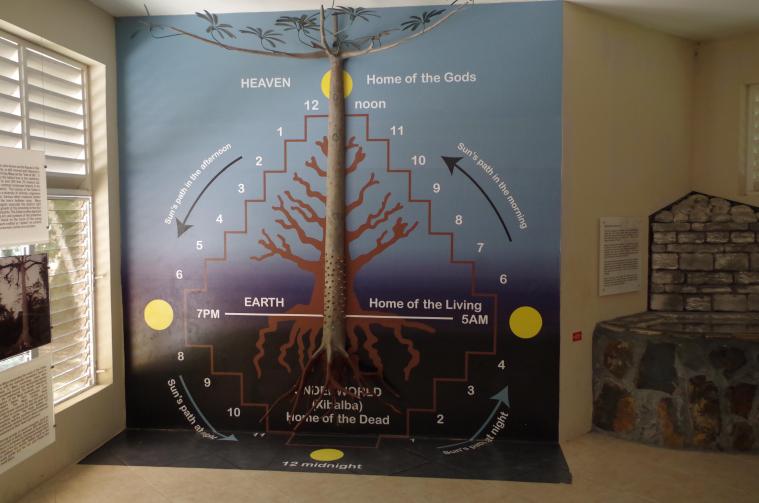
The Maya Five Worlds model (explained in the article The Maya World Tree) matches the length of the Precession of the Equinoxes’Cycle almost perfectly. Five consecutive 5,125-year Maya Great Cycles (which are Maya’s World Ages depicted in their creation story and measured by their Long Count calendar) result in a total of 25,625 Gregorian years when added up. This makes the Maya Five Worlds model very valuable for pinpointing and analysing our present position in time from a big picture perspective and within the context of the Precession of the Equinoxes’Cycle.
Another ancient cycle that correlates with, and in this case is based upon, the Precession of the Equinoxes Cycle, is a particular version of the Vedic Yuga Cycle from India. That version is a fractal (a cycle within a cycle) of the more commonly known and used Maha Yuga Cycle (also known as the Chatur Yuga Cycle) of India which has a duration of 4,320,000 years.
The 24,000-year precession of the equinoxes’ version of the longer Yuga cycles was reintroduced to the world by the Hindu sage Swami Sri Yukteswar Giri in his influential book The Holy Science, published in 1894. Sri Yukteswar states in his book that the 24,000-year version was lost to the world during the Dark Age of Kali Yuga when many wise men retired to the mountains and a lot of knowledge was lost. The 24,000-year version of the cycle goes as far back as the Laws of Manu which date back to at least 1,500 BC.
The advantage of using the above two cycles side by side is that both cycles measure and define consciousness (each in their own way) within the same overall timeframe, which is the Precession of the Equinoxes’ Cycle. By using both these complementary frameworks, a more holistic and comprehensive understanding can be arrived at.
The extract below is from Part 1-C in the Darkness Before Dawn series that has been published at GypsyCafe.org
The Maya creation myth depicts a battle between the forces of dark and light in the story of the Hero Twins, two brothers who are summoned by the Lords of Xibalba for a ballgame with them in the underworld. What follows is a classic and rich example of The Hero’s Journey, which is a universal pattern of transformation and growth found in the myths and stories of all cultures as well as in the lives of all human beings. All humans understand this concept at a fundamental level, either consciously or unconsciously, since it’s an archetypal pattern in the human psyche.
The sequence and structure of The Hero’s Journey became popularised in Western culture to a large extent through the works of Jungian analyst and writer Joseph Campbell in his book The Hero with a Thousand Faces. Similarly, the epic journey of the Maya Hero Twins (who were Light Bearers and a force for good) through the Maya underworld of Xibalba ultimately results not only in the complete transformation of the protagonists (several times over and in different forms), but in the ordinary world being transformed, too. During the overall process, the forces of darkness are eventually defeated with their powers being greatly diminished in all spheres.
The most fundamental theme in the underlying structure of The Hero’s Journey – in all stories – is that the hero is compelled to face the darkness, often against their will; but only by doing so can they bring about positive change within themselves and within the world at large.
Nelson Mandela’s inauguration speech as President of SA – 10 May 1994
This piece below is compiled and developed from comments I made on a post over atTheBurningHeartblog:
Never, never and never again shall it be that this beautiful land will again experience the oppression of one by another and suffer the indignity of being the skunk of the world. Let freedom reign – Nelson Mandela’s inauguration speech as President of South Africa – 10 May 1994 (full speach here)
The problem with racism and xenophobia is that it will always be with us because of ethnocentrism (seedefinition), which is the tendency for all ethnic, cultural and language groups to first have their own self-interests at heart. Ethnocentrism is one of the mechanisms that create natural diversity among peoples. However, another reason why racism will always be around is because (unfortunately) people will always ignore racism in some instances while being against it in others. What this comes down to is that all the online and offline conflicts and debates about racism are largely a waste of time.
The only way to reduce negative types of ethnocentrism would be to always work towards positiveethnocentrism (see details here). However – and this is the crux of it – very few people are actually interested in the underlying causes of racism because it is a very useful tool for reaching various political objectives …
The concept of racism has become a blunt instrument that is used to achieve political objectives through identity politics and other strategies that have little to do with actual racism. Identity politics is in many instances racial in itself, because it’s ethnic groupism which sets itself in opposition to other ethnic groups – and by positioning itself in opposition to other ethnic (or gender groups) it leaves no room for actual Unity in Diversity. Moreover, while doing this it claims to be against racism and to be fighting for equality. The disingenuousness of this approach is self-evident.
The bottom-line is that anybody who is really against racism or violence would condemn all such acts – across the board – especially if they attach the label ‘anti-racism’ to it, because these words imply being against all types of racism, not only some forms of it. Therefore the vast majority of self-appointed ‘moral emperors’ are wearing no clothes. They do not oppose all forms racism, which means that they support some types of racism. This is self-evident too.
The resistance of individuals and groups to own their own ethnocentrism, combined with their tendency to project that what they are guilty of onto others, is the principle cause of double-standards. Only by becoming more self-aware of one’s own behavior (or that of your group) can societies begin to return to a more sane and balanced and a less dangerous world. This will only start to happen when more people start pointing out double standards to each other.
**
A Case Study
South Africa had 59 race-based laws discriminating against the black population of that country over a period of 70 years (from 1910 to 1980) which included British colonial rule and the apartheid-era combined. In present-day South Africa there are as many as 114 race-based laws that discriminate against the white minority in South Africa. These laws have accumulated during the 26 years of democracy and more laws continue to be added as time goes by, with no deadline in sight for the discrimination to end. (Source 1 / Source 2)
During all the (so-called) anti-racism protests around the world in 2020, South Africa was completely ignored, yet this used to be the most popular country to cite for evidence of systemic racism. It makes one wonder why all the equality activists have gone so quiet. A true activist (a Truth Activist) would always oppose all forms of discrimination and would have the consistent courage to do so, but the truth is that most activists today are frauds.
For me the current situation can only be dealt with when we apply morality and ethical standards equally, because actually the issue of racism is used to claim moral superiority by people who are not only guilty of the same, but are often engaged in it more than the people they tend to blame and accuse. We also see that people are very comfortable in denouncing racism (old and new) as long as it is of a particular kind, i.e. by one particular ethnicity upon another particular ethnicity, but when it happens in reverse, they refuse (!) to acknowledge it or to call it out. This is a real problem, because what we have then is a kind of moral tyranny that is pathological and driven purely by ideology.
This tendency is now so wide-spread that it could very well lead to real tyranny (if it isn’t already …) Any and all kinds of hypocrisy and double-standards have to be called out, have to be pointed out continuously and consistently (persistently!). That is the ONLY remedy to regain and maintain balance. Hypocrisy is the ultimate enemy – and also the ultimate evil, because it allows evil to be done in name of good. This is not simply the banality of evil, because that is when people are cogs in a bureaucratic wheel who follow orders, because they are unthinking and indifferent and they comply with order from authority (Hannah Arendt explored this theme very well).
No, it is something different and it’s worse. This kind of evil – hypocrisy and double-standards – is pathological when it is deliberate, which seems to be the case in most cases related to the subject of racism nowadays – people seem to be very aware that they have double-standards when it comes to these issues, yet they persist and practice their double-standards aggressively anyway.
We need a return to God. I’m afraid that’s the only force that can save humanity from this dark age we are going through.
Darkness Before Dawn – Part 1-B: Q: What is the prophecy for Katun 2 Ahau?
The portion of the prophecy for Katun 2 Ahau (2012 to 2032) that is considered the most important by scholars is “It was halfway famine, it was halfway feast. That was the burden of Katun 2 Ahau.”
This katun has, indeed, been prosperous from 2012 to 2020, with 2020 marking almost eight years of continuous general prosperity. Compared to past decades – and notwithstanding a lot of inequality still present in the world – there has probably never been so much general prosperity in the world on a global scale in the known history of humanity. That is if we consider how large the global population is today compared to past centuries when poverty levels were much higher.
**
Q: What typically happens during a Katun2 Ahau?
When Maya elders and shamans, or Western scholars, study a particular katun’s characteristics, they analyse the historical time frames of the katun’s past occurrences. The objective is to identify patterns of events that occur whenever a particular katun is active. Through this method, what typically happens during a katun becomes sufficiently clear to make predictions for what would or could happen when that katun is active again in the future. Read More …
**
Each katun builds on its previous manifestation 256 years before it – and also on katuns that came before that. By studying history through a Maya calendar lens, it becomes evident that an evolutionary process related to the development of human consciousness is at work in the universe, which is – according to some schools of thought – the real reason why we find ourselves here on this planet, at this point in time. Read More …
**
In light of all these developments, we can clearly observe – and safely conclude – that the prophecy will continue to play out accurately all the way to its end in 2032. The Mayas were not wrong … they were right (!). It was just that few people in the mainstream paid attention to the katun prophecies.Read More …
There is an important energy trend in the Mayan Calendars that also applies to the 20 year “double-decade” (katun) period that we are in right now (‘Katun 2 Ahau’, from 2012 – 2032) and this is worth taking note of as we move into the 2020’s.
The energy flow rises and falls in a wave-like motion in Maya Calendar ages (regardless of whether the ages are long or short). The energy of an age starts to climb the energy pyramid at the beginning of the age, reaches its peak at its mid-point, and then descends on the other side.
What that means within the context of a katun-age is thatthe energy grows in intensity during the first half for 10 years, peaks during the 10th and 11th years, and declines again afterwards for 10 years. The years surrounding the peak years would all be potent in terms of being influenced by the energy of the age.
Illustration of energy pyramid for Katun 2 Ahau: December 22, 2012 – September 7, 2032.
Turbulence Ahead
Rising (10) 2022 – 2023 (11) Falling
(9) 2021 / \ 2024 (12)
(8) 2020 / \ 2025 (13)
(7) 2019 / \ 2026 (14)
(6) 2018 / \ 2027 (15)
(5) 2017 / \ 2028 (16)
(4) 2016 / \ 2029 (17)
(3) 2015 / \ 2030 (18)
(2) 2014 / \ 2031 (19)
(1) 2013 / \ 2032 (20)
(0) *2012 / (<< from Dec 22. Note: 2012 was not a full year)
Calendar Refresher:
The Maya Short Count calendar is a 256 year cycle that assigns a specific symbol called a tone to each of its thirteen 20 year (19.7 to be exact) katuns. This number denotes certain aspects of a katun’s energy. For example, in the current katun,2 symbolizes duality and polarity (among other characteristics).
The previous katun, from 1993 to 2012. had tone4assigned to it, which represented stability and order (tone 4 is known to be one most stable energies in the Maya calendars). An immediate observation that can be made is that at the transition point in 2012 the energies shifted metaphysically from stability to polarity – and that is how it has played out in reality too – there has been a huge increase in polarization and social upheaval since 2012.
The next six years, from 2020 to 2025 (as illustrated in the energy pyramid above), will have the most intense energy in this twenty year energy pyramid. This means that we may well be entering a period of high turbulence and volatility – if the trend of growing social and political polarization in societies in recent years is anything to go by …
According to this energy model the energy intensity should start to decline again from around 2026 onward. Some may find this information useful in terms of doing the neccesary mental or spiritual preparation for turbulent times (please see resources below).
The rising and falling of energy in the Maya calendars (there are close to 20 of them) is a general trend in the Maya calendars, although it might not affect all cycles equally.
Another aspect to the energy pyramid is that (in some cycles) during the energy incline the progression is more materialistic and during the energy decline it is more spiritual, so consciousness would shift from a more materialistic outlook in the first half to a more spiritual outlook in the second half. This may also be the case during this katun, with a subtle shift possibly happening in 2022. An illustration of this material to spiritual trend during a Tracena (a 13 day Maya calendar week) is illustrated and explained on this page by Mark Elmy in Guatemala: https://thefourpillars.net/?p=6675
The gradient of the rising and falling energy would not be as steep as depicted in the energy pyramid illustrated above (this was done due to limited space on the page). The change in energy would usually be very gradual and shift over time, which is why people are often not aware of it happening.
Although I have done my best to keep this information factual, these views should be considered my own. A more detailed analysis about rising and falling energy (with references) can be found in my essay: The Valley of Shadows in the Landscape of Light.
Further Reading
The Energy Shifts series (explains in detail how the metaphysical energy shifts work and their influence on consciousness and life).
The Darkness Before Dawn series (explains why humans are going through this testing period and the best ways to approach it).
—
J.J. Montagnier is a travelosopher and Maya time explorer. He has been studying and writing about Maya calendar related subjects since 2014. He traveled to Central America in 2015 to familiarize himself better with the Maya culture and its history. More about the writer here.
‘Chulpas’ are funerary towers (burial tombs) constructed by the Colla Aymara people in pre-Inca times. The chulpas at Sillustani are known to be some of the finest and most cylindrical examples of chulpas in the entire region (Peru and Bolivia). Photo by JJM, April 16, 2019.
Higher Bodies of Water Just over a year ago, on April 16, 2019, I visited the port city of Puno on the shores of the famous Lake Titicaca in Peru. Titicaca lake is widely known as the “highest navigable lake in the world” at 3,812 m (12,507 ft) above sea level, but there are other bodies of water that are higher, but not larger – and one of those is Lake Umayo situated 20 km’s from Puno.
A remote place Lake Umayo feels remote, even though the journey from Puno only takes about 45 minutes (with a couple of stops along the way.) Silently overlooking the lake from the hill right on the edge of it is the rather mysterious and mystical pre-inca burial site of Sillustani. It being positioned in a picturesque area with the stunning backdrops of Lake Umayo and its lagoon with the deep green of the surrounding landscape makes for an impressive visual experience.
Sillustani The site itself consists of numerous tower-like structures known as chullpas, which were Aymara funerary towers for nobility. The chullpas at Sillustani are known to be some of the finest and most cylindrical examples of chullpa burial tombs in the entire region. It is speculated that these initial structures by the Colla (a subgroup of the Aymara people) were possibly later used as foundations for new towers by the Incas due to the different architectural styles found at the site.
‘The Tytler Cycle’ or ‘The Cycle of Democracy’ is commonly attributed to Alexander Fraser Tytler (1747 –1813). This cycle is also know as ‘The Fatal Cycle’.
‘No War’ – archive photo of protest march in Dublin in 2003 (Photo by JJM)
Dark Are the Days, but the Light is Coming, Part 3 – Through the Eye of the Needle
In this 5-Part series we are exploring the purpose of polarity and the nature of truth – JJM
**
Introduction
If, hypothetically speaking, the universe wanted to evaluate heart and soul development at critical junctures in time, dark ages would provide the ideal circumstances for doing so. Dark ages can be terribly regressive and destructive and it could be hard to reconcile oneself with the idea – from a spiritual perspective – that the universe would want to impose such harsh circumstances upon humankind. However, in the context of the earth being an incubator for the soul, (as postulated in Parts 1 & 2), the possibility that human souls would be tested at important transition points is almost self-evident, especially if the objective is for some kind of sorting to take place.
Turning Down the Lights
When all the lights are dimmed, will there be an inner light shining from
within? In a culture of indifference, who would pass through the narrow
gate [1] to make a difference?
—
How would ‘the lights’ be ‘dimmed’ during a dark age?
[1] Matthew 7:13-14: [13] Enter through the narrow gate. For wide is the gate and broad is the road that leads to destruction, and many enter through it. [14] But small is the gate and narrow the road that leads to life, and only a few find it.
In June of this year while visiting Iguazu Falls in Misiones Province in Northern Argentina, I decided to do a side-trip to a recommended site in the region. This ended up being a very informative and enjoyable day trip which I am now finally posting about.
Mural in Magdalena del Mar, Lima, Peru (Photo by JJM, April 2019)
Dark Are the Days, but the Light Is Coming, Part 2 – A Heart Monitor
In this 3-Part series we are exploring the purpose of polarity and the nature of truth – JJM
**
“The test of any Soul’s maturity will be reflected by the choices it makes while experiencing life’s challenges, sometimes in severe blindness when all of one’s reality opposes one’s nature. It’s successes will be determined simply by it’s capacity to align itself to the purity and natural instinct of it’s heart.” – The Sacred Tree – The Daiva Yugas and The World Cycles of Human Evolution [1]
A Heart Monitor
All indictions are that humans are going through an extensive testing period. We have heightened polarity (extreme polarity some may say) and a concentration of darkness (some may say extreme darkness) at the same time (See: Part 1: ‘Why is the polarisation so extreme?’)
If the earth is a learning ground and a training platform for human souls (a belief held by Mayans and some schools of Hinduism – among others) then surely periodic testing to evaluate soul-development would be in order? If the Universe wanted to gauge people’s hearts and souls, how would it do it?
Dark are the Days, but The Light is Coming – Parts 2 & 3 (+1)
In the next chapters we will continue to take a deep dive into how polarity facilitates human development and growth; we will consider how we as individuals can find our purpose and maintain balance within our polarised times; we will contemplate the nature of truth in a ‘post-truth’ world and we will consider how we can get ready for the incoming light of truth. Please subscribe to receive alerts of updates.
In this 3-Part series we are exploring the purpose of polarity and the nature of truth – JJM
Introduction
Throughout the ages there have been times of turmoil and times of peace. In recent years the world has been going through a period of high polarity, with palpable societal polarisation as a result. Considering all the crises the planet is facing, a unified approach to dealing with them globally is likely to remain elusive as long as societal polarisation remains a feature. This situation, with no clear end in sight, raises many important questions.
Why have some societies become so polarized? Should we not have moved into global harmony after 2012? Does polarisation have any purpose? Why is the polarisation so extreme? How long will it last? How well are we handling it? Are humans capable of living in harmony at all? How can we deal with major world problems during all this polarization?
Fortunately some of the above questions can already be answered, but some answers are more accessible when taking a metaphysical view. Keeping an open mind is therefore recommended as we delve into these rather complex issues. During our discussion it will become evident that some answers automatically raise further questions. In our search for answers we will be exploring them too.
Dark are the Days, but The Light is Coming – Parts 2 & 3 (+4)
In the next chapters we will continue to take a deep dive into how polarity facilitates human development and growth; we will consider how we as individuals can find our purpose and maintain balance within our polarised times; we will contemplate the nature of truth in a ‘post-truth’ world and we will consider how we can get get ready for the (future) incoming light of truth. Please subscribe to receive alerts for updates.
By J.J. Montagier
J.J. Montagnier is a futurologist and travelosopher based in South America. His writings on the Mayan calendars are intuitively inspired and are influenced by his knowledge of Jungian psychology. The author visited Central America in 2015 to do research on the subject.
Ubuntu Festival, Cape Town, South Africa – 2009 (Photo by JJM)
Ethnocentrism is inherent in all human beings. It has advantages and disadvantages. Since it cannot be removed or reduced without negative side effects, it would be better to find ways to work with it positively.
Positive ethnocentrism would allow for the natural maintenance and preservation of a person’s original culture and identity while also allowing and motivating for an appreciation of other cultures that live within the same environment. Unity in Diversity could be the perfect example of positive ethnocentrism in that it is very likely to deliver consistent positive results, if fostered, cultivated and maintained on a continuous basis.
Implementing Unity in Diversity would depend on both will and goodwill of all parties involved. Unity in Diversity has a weak point in that it is a relatively fragile concept that is vulnerable to being disrupted by intrusive forms of negative ethnocentrism such as identity politics and nationalism.
JJ Montagnier is a writer based in South America. He has a personal interest in conflict resolution, democracy and social coehsion. He has lived in South Africa and Northern Ireland (among other places.) The views and opinions expressed in this essay are those of the author.
Publishing details:
Original version published on *Writerbeat.com: July 16, 2018 [*now defunct].
On Sunday the 14th of April, a day after I arrived in Cusco on the weekend before Easter, I did one of the many excursions that are available from Cusco city. The Maras and Moray excursion is quite a well known one, although not the most popular, but it is one of the best day trips in the Sacred Valley due to the jam-packed itinerary and especially the colours and contrasts encountered on this excursion – all in one day.
‘Holding the Key’. A mural by Jade Rivera, Barranco, Lima. Photo by JJM.
We are Destined to be Co-Creators and Free Will is the Key. The interesting thing is that the source (the Source) and force of creativity, (creative energy) flows through humans, which then leads to the creation of new paradigms. Energy creates through us – we are the channels for Source energy on earth, but we are not (the main) Source itself.
We are remote extensions of Source, so remote that many of us are not aware of our connection to source. As channels of Source we are collaborating with Source. At the same time we are also autonomous energy configurations. That is because we all come into this world as an energy archetype – we could call this our born identity.
Each person’s born identity – the archetype he or she was born as – is an energy configuration (energy frequency) because in fact it comprises a combination of a number of archetypes, with the main core archetype being dominant.
Caral in Peru is estimated to be at least 5000 years old.
Two hundred kilometres north of Lima lies the recently discovered remnants of one of the most ancient centres of a civilisation yet to be unearthed in modern times.
There are no limits to growth. Although there are limits to external growth, there are no limits to internal growth. One thing that will never change is our will to grow. As humans, we are absolutely driven to grow. The very reason why we are here is to grow – but not only materially so, and that is where we need to change our thinking. What has to change is the way that we grow. We need to shift our approach from being outer-growth-oriented to inner-growth-oriented.
The Great Shift
Growth is cyclical; sometimes it is material and sometimes it is spiritual (as illustrated in Part 5). We have entered an era of exponential spiritual growth while the window for material growth is closing. Most people are so committed to material growth that they are unable to make the shift in advance – and few are even contemplating it.
From Circles to Spirals
Material growth is a closed circle – a self-reinforcing loop that relies on the continuous availability of limited external material resources, some of which we will eventually run out of, without there being any substitutes.
Spiritual growth in the form of inner self-development is an open, ascending spiral with infinite growth potential that draws on unlimited intangible resources within and which can be tapped indefinitely for internal expansion.
Making the Shift
The whole objective of self-development and self-transformation is to grow beyond the general state of being that is the standard level of development of the times. Those who follow this path become the pioneers who traverse The Valley of Shadows in advance. They transcend the limits of the present paradigm early by living in the next paradigm consciously and practically, while still being in the old paradigm at the same time.
The Inner Growth Imperative
The inner growth imperative will, one day, become as powerful as the outer growth imperative is today. To be in line with the new energy in advance, we would need to switch over from an external economic growth imperative – based on material and physical accumulation and consumption – to an internal self-realization growth imperative that is based on internal expansion and the accumulation of non-tangible inner-wealth.
Once we have made this shift consciously and intellectually, we will have the ability to be happy with less and we will be able to embrace the coming changes more naturally. We will also have reduced our carbon footprint in advance. Individuals who choose this path are a minority, but they will be better positioned to pioneer and conceptualize new ways of living compared to people living exclusively in a material growth paradigm physically and mentally.






 Gypsy Café
Karl Masks
All Cartoons By JERM (South African cartoonist)
Share this:
5 Comments | tags: Cartoons, Current Affairs, Graphic Art, Humor, Satire, Sheep, Social commentary, Society | posted in Society